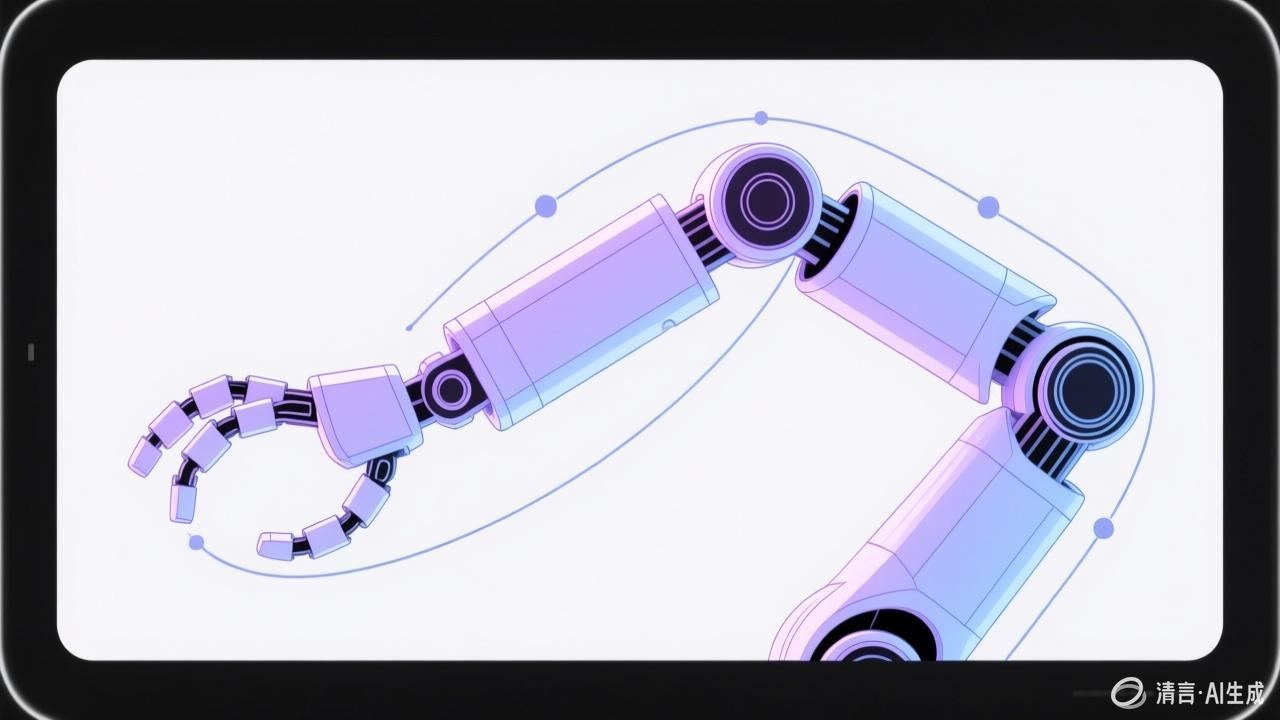
Week 01 | SKILL-003
Robot Core Components: A Technical Deep Dive
Published: March 28, 2026 | Author: Smartotics Learning Journey | Reading Time: 7 min
Figure 1: Every robot combines perception, decision, and execution systems
Robot System Architecture
PERCEPTION → DECISION → EXECUTION
(Sensors) → (Computing) → (Actuators)
Quick Summary
Every robot consists of three interconnected systems: Perception (sensing the environment), Decision (processing and planning), and Execution (physical actions). Understanding these core components is fundamental to robotics. This article explores each system in detail, from basic sensors to AI processors, helping you understand how robots perceive, think, and act.
System Architecture: The Robot Triad
Robots, like living organisms, require three fundamental capabilities to operate:
The Robot Triad
- SENSE: Perceive environment through sensors
- THINK: Process information and make decisions
- ACT: Execute physical actions through actuators
These three systems form a continuous feedback loop. The robot senses its environment, processes the data to make decisions, acts on those decisions, then senses the results to refine its next action.
Historical Perspective
Early industrial robots were simple open-loop systems: they received precise instructions and executed them without sensing the results. Modern robots are closed-loop systems with real-time sensing and adaptive behavior. This shift, accelerated by AI advances in 2025, enables robots to handle unstructured environments.
Perception System: How Robots Sense
The perception system converts physical phenomena into data the robot can process. Sensors are the robot’s interface with the physical world.
1. Exteroceptive Sensors (External Environment)
Vision Sensors
| Type | Description | Applications | Key Products |
|---|---|---|---|
| RGB Camera | Standard color cameras | Object recognition, inspection | Logitech, Basler |
| Depth Camera | Captures 3D spatial data | Navigation, manipulation | Intel RealSense, Azure Kinect |
| Stereo Camera | Dual cameras for depth | 3D mapping, obstacle detection | ZED, Duo |
| Event Camera | Pixel-level brightness changes | High-speed tracking, drones | Prophesee,iniVation |
Range Sensors
- LiDAR: Laser-based 3D scanning. Price dropped from $10,000 to under $200 for consumer-grade
- Ultrasonic: Sound-based, low cost, used for proximity detection
- ToF (Time of Flight): Measures light reflection time for depth
- Radar: Works in all weather, used in autonomous vehicles
Touch/Tactile Sensors
- Contact Sensors: Detect if contact occurred
- Pressure Sensors: Measure force distribution
- Tactile Arrays: 2D pressure mapping (like Fingervision)
- Force/Torque Sensors: 6-axis F/T sensors for precise force control
2. Proprioceptive Sensors (Internal State)
Proprioception tells the robot about its own state:
| Sensor | Measures | Applications |
|---|---|---|
| Encoder | Rotation angle/position | Joint position feedback |
| Potentiometer | Variable resistance | Simple position sensing |
| IMU | Acceleration, angular velocity | Balance, orientation (drones, humanoids) |
| Current Sensor | Motor current draw | Torque estimation, motor protection |
| Temperature | Thermal state | Overheating protection |
3. Environmental Sensors
- GPS/GNSS: Outdoor positioning (limited indoors)
- Magnetic: Compass heading, metal detection
- Gas/Chemical: Environmental monitoring, safety
- Sound: Microphones for voice commands, acoustic inspection
Decision System: How Robots Think
The decision system processes sensor data and generates control commands. It ranges from simple microcontrollers to sophisticated AI processors.
1. Control Units
Microcontrollers (MCUs)
- Arduino (ATmega/ARM): Best for beginners, easy to learn
- ESP32: Built-in WiFi/Bluetooth, dual-core, low cost
- STM32: Industrial-grade, high performance
- Raspberry Pi Pico: Newcomer with excellent price/performance
Single-Board Computers (SBCs)
- Raspberry Pi 4/5: Most popular, large ecosystem
- Jetson Nano: NVIDIA GPU for AI workloads
- Google Coral: Edge TPU for on-device ML
- Rock Pi: Alternatives with various specs
Industrial Controllers
- PLC (Programmable Logic Controller): Industrial automation standard
- Robot Controllers: Proprietary systems (KUKA KRC, ABB IRC5)
- Soft PLCs: Software-based industrial control
2. AI Processors
For advanced perception and decision-making, dedicated AI processors are essential:
| Platform | Vendor | Strength | Typical Use |
|---|---|---|---|
| Jetson Orin | NVIDIA | GPU + AI acceleration | Autonomous vehicles, humanoid robots |
| Edge TPU | Energy efficient ML | Edge inference, on-device AI | |
| Myriad X | Intel | Vision processing | Realsense-equipped systems |
| Hailo-8 | Hailo | High performance/watt | Smart cameras, AMR |
3. Software Stack
Operating Systems
- ROS/ROS2: Robot Operating System - the standard for robot software
- Linux (Ubuntu/RTOS): Foundation for most robot systems
- FreeRTOS: Real-time operating system for microcontrollers
- VXWorks: Commercial real-time OS for critical systems
AI/ML Frameworks
- TensorFlow/PyTorch: Deep learning training and inference
- TensorRT: NVIDIA’s optimized inference engine
- ONNX: Cross-framework model interoperability
- MoveIt: Motion planning for robot arms
Execution System: How Robots Act
The execution system converts commands into physical motion. This includes actuators, power systems, and end effectors.
1. Actuators: Types and Characteristics
| Type | How It Works | Pros | Cons | Applications |
|---|---|---|---|---|
| DC Motor | Direct current → rotation | Simple, cheap, versatile | Needs gearing for precision | Wheels, simple mechanisms |
| Servo Motor | DC motor + encoder + controller | Position control, feedback | Limited torque | RC vehicles, small robots |
| Stepper Motor | Digital pulses → discrete steps | Precise positioning without encoder | Can lose steps under load | 3D printers, CNC, 3DOF arms |
| BLDC Motor | Brushless DC, electronic commutation | Efficient, durable, powerful | Needs ESC controller | Drones, humanoid robots |
| Linear Actuator | Converts rotation to linear motion | Direct push/pull | Limited stroke | Height adjustment, grippers |
| Pneumatic | Air pressure → motion | Fast, strong, compliant | Needs compressor, hard to control | Industrial grippers |
| Hydraulic | Fluid pressure → motion | Extremely powerful | Heavy, complex, messy | Heavy machinery, excavators |
2. Key Actuator Specifications
- Torque: Rotational force (Nm) - determines lifting capacity
- Speed: RPM or rad/s - determines how fast it rotates
- Precision: Resolution and repeatability
- Power Density: Torque relative to weight
3. Power Systems
Batteries
| Type | Energy Density | Weight | Applications |
|---|---|---|---|
| LiPo | High | Light | Drones, small robots |
| Li-ion | Very high | Moderate | Humanoid robots, EVs |
| NiMH | Moderate | Heavy | Legacy systems |
| Lead Acid | Low | Very heavy | Industrial AGVs |
Motor Drivers
Motor drivers interface between the controller and actuators:
- H-Bridge: Controls direction and speed of DC motors
- ESC (Electronic Speed Controller): Controls BLDC motors
- Stepper Driver: Handles stepper motor pulses
- Servo Controller: PWM-based position control
4. End Effectors
End effectors are the tools attached to the robot’s arm:
- Grippers: Parallel, angular, adaptive (for different objects)
- Vacuum Grippers: Suction-based for smooth surfaces
- Tool Changers: Automatic swapping of different tools
- Specialized Tools: Welding torches, paint guns, screwdrivers
System Integration
The Feedback Loop
Modern robots use closed-loop control:
- Sensors measure current state (joint positions, forces, environment)
- Controller compares state to desired state
- Control algorithm calculates error
- Actuators apply correction
- Repeat at high frequency (typically 100-1000 Hz)
Communication Protocols
| Protocol | Speed | Distance | Common Use |
|---|---|---|---|
| I2C | Slow (400kHz) | Short | Sensor boards, IMUs |
| SPI | Fast (MHz) | Short | High-speed sensors, displays |
| UART | Moderate | Moderate | GPS, some sensors |
| CAN Bus | Fast | Long | Automotive, industrial robots |
| Ethernet | Very fast | Long | Industrial robots, ROS |
Building Your First Robot
For beginners, I recommend starting with:
Beginner Stack
- Controller: Arduino or ESP32
- Actuators: Servo motors or DC motors with motor driver
- Sensors: Ultrasonic sensor, IR sensors
- Software: Arduino IDE, basic serial communication
This simple stack teaches fundamental concepts before moving to more complex systems.
Key Takeaways
- Three systems work together: Perception (sensors), Decision (computing), and Execution (actuators) form a continuous feedback loop.
- Exteroceptive sensors (vision, LiDAR, tactile) sense the environment; proprioceptive sensors (encoders, IMUs) sense the robot’s internal state.
- AI processors like NVIDIA Jetson and Google Edge TPU enable advanced perception and decision-making in modern robots.
- Actuator choice depends on requirements: DC motors (simple), servos (position control), BLDC (efficient power), linear (direct motion).
- ROS/ROS2 is the standard robot software framework, providing communication, navigation, and manipulation libraries.
- Start simple: Arduino/ESP32 + servos + basic sensors teaches fundamentals before tackling complex humanoid systems.
Disclaimer
For informational purposes only. This article does not constitute investment, financial, or business advice. All information is based on publicly available sources and the author’s personal learning perspective.
Image Credits: All images are AI-generated illustrations for blog purposes only. © 2026 Smartotics Learning Journey.